

You finally worked up the nerve. You researched the clinic, read every review, stalked their Instagram before-and-afters, and booked the consultation. The space smells like eucalyptus and quiet money. The lighting makes everyone look like they drink a gallon of water a day. You’re sipping cucumber water in a plush chair, feeling pretty good about yourself, and then the provider hands you the treatment plan with pricing.
And your stomach drops.
Maybe you expected a couple hundred dollars and saw four figures. Maybe you budgeted for one syringe and realized you need three. Or maybe you just Googled “how much is botox” at 2 a.m., saw a dozen different numbers, and now you’re convinced everyone is either scamming you or running a basement operation out of their garage.
Here’s the thing. Med spa pricing isn’t a secret, but it is a puzzle. The same treatment can cost $12 per unit in one city and $18 in another. A Hydrafacial might be $150 at a chain salon and $300 at a medical spa with an actual physician on site. And that dermal filler cost? It swings wildly depending on whether you’re restoring cheek volume or touching up your lip line. (Spoiler: they’re not the same price, and they shouldn’t be.)
You deserve to know what you’re paying for before you ever lie down on the treatment bed. So let’s pull back the curtain on med spa treatment cost in 2026—real numbers, real variables, and the honest context that helps you decide where to spend your money.
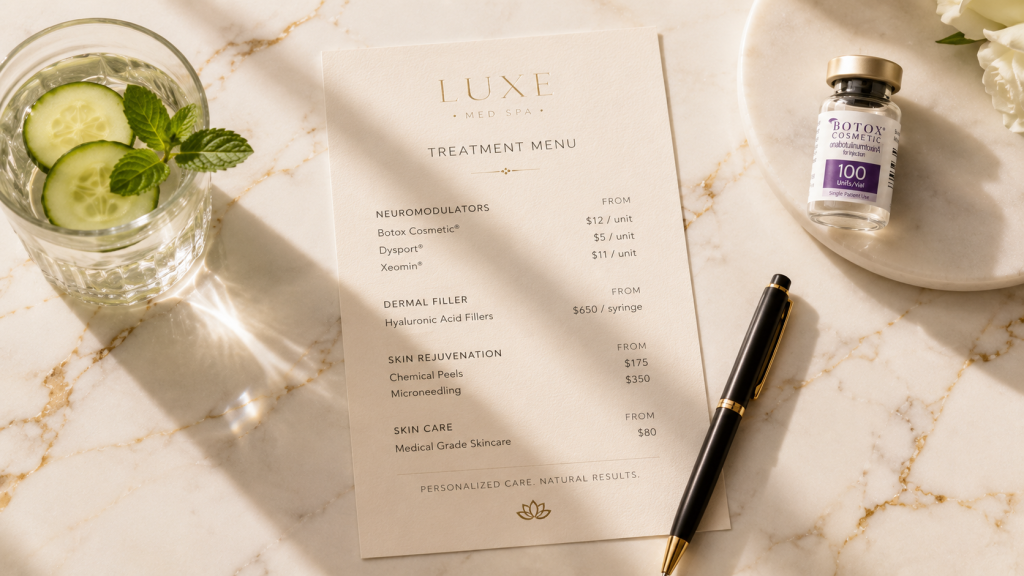
Caption: Walking through our doors for a consultation shouldn’t feel like stepping into a mystery—our med spa treatment cost guide keeps things transparent from the start.
Quick Answer: In 2026, med spa treatment cost ranges from $150 for entry-level facials to $2,500+ for combination therapies. Botox runs $12–$20 per unit, dermal fillers start at $650 per syringe, laser hair removal averages $200–$500 per session, and Hydrafacials typically cost $199–$350. Prices vary by provider expertise, geographic location, and product brand.
Why Med Spa Treatment Cost Varies So Much
If you’ve ever called three clinics for the same quote and gotten three completely different numbers, you already know the frustration. But those differences usually aren’t random. They’re based on factors that directly affect your safety and your results.
Provider experience is the big one. A board-certified dermatologist or plastic surgeon with fifteen years of injecting experience charges more than a newly certified aesthetician. That’s not snobbery; it’s risk management. An expert injector uses fewer units to achieve the same effect because they understand facial anatomy at a granular level. They know exactly where the orbicularis oculi ends and the zygomaticus major begins. A less experienced provider might over-treat to be safe, which costs you more in product and increases your chance of looking frozen.
Product brand matters too. Not all fillers are created equal. Juvederm, Restylane, Radiesse, and Sculptra each have different manufacturing costs, longevity profiles, and ideal use cases. A clinic using only premium, FDA-cleared products with verified supply chain documentation will price higher than one cutting corners with gray-market imports. (And yes, that happens more than you’d think.)
Geography plays a huge role. A med spa in Manhattan or Beverly Hills pays rent and staff salaries that a clinic in a mid-sized Midwestern city doesn’t. Those overhead costs transfer to your invoice. National averages are helpful benchmarks, but your local market reality is what matters for your wallet.
And honestly? The size of the treatment area matters more than people realize. Forehead Botox is relatively cheap because it’s a small muscle group. But if you’re treating the forehead, glabella, and crow’s feet together, you’re looking at a completely different quote. Same with laser hair removal. Upper lip? Quick and affordable. Full legs? That’s a marathon, not a sprint.
How Much Is Botox?
Let’s start with the question that lands in our inbox daily. Botox—and its cousins Dysport and Xeomin—is priced by the unit, not by the area. This confuses people because “units” are invisible. You can’t hold one in your hand.
In 2026, the national average for Botox ranges from $12 to $20 per unit. Dysport often runs slightly lower per unit, but you need roughly 2.5 to 3 times as many units to match the Botox equivalent. Xeomin typically falls in the same per-unit range as Botox.
So what does that mean for your face?
- Glabella (the “11s”): 20–30 units = $240–$600
- Forehead lines: 10–20 units = $120–$400
- Crow’s feet: 12–24 units = $144–$480
- Full upper face (all three areas): 40–60 units = $480–$1,200
Most patients need a combination. If you’re in a major metro area with high demand, expect to land on the higher end. If you’re in a smaller market or visiting a training clinic with supervised residents, you might find $10–$12 per unit. But here’s where it gets interesting: the per-unit price isn’t the whole story. A master injector at $18 per unit might use 35 units total, while a novice at $12 per unit might use 50 to achieve a similar look. Do the math. Sometimes the “expensive” provider is actually the better value.
We had a client last month who came in with a quote from a Groupon special. $8 per unit. She asked if we could match it. We couldn’t, and we explained why: at that price point, someone is either diluting the product heavily, using non-cosmetic grade toxin, or rushing through appointments so fast that placement accuracy suffers. She stayed with us. Her results lasted four months instead of the six weeks she got from the discount clinic.
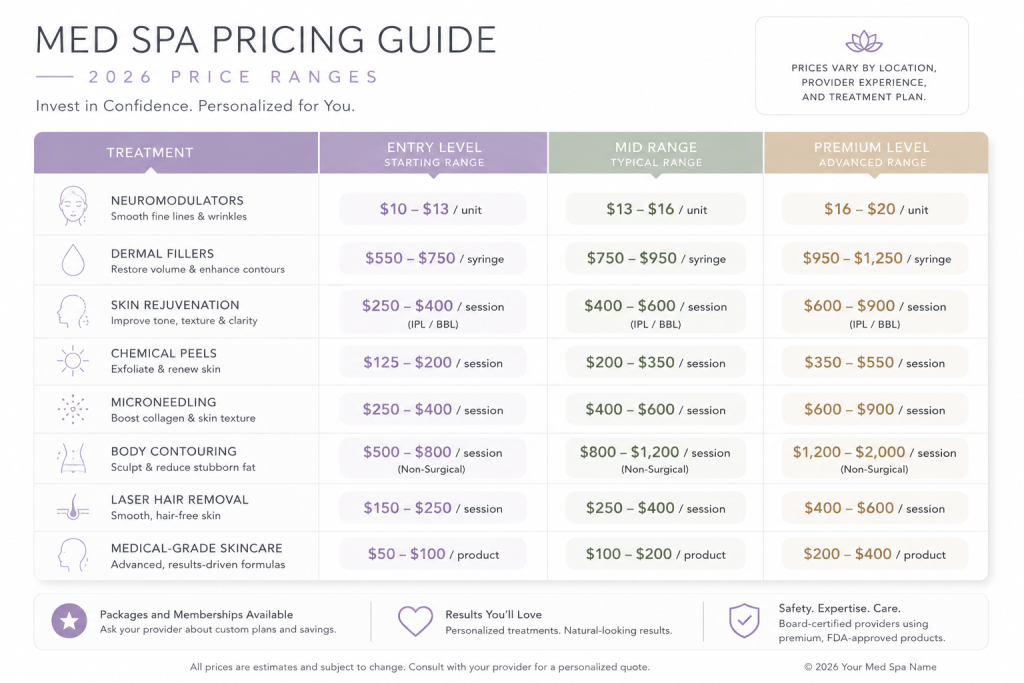
Caption: A clear med spa treatment cost breakdown helps you budget realistically before your first consultation.
Dermal Filler Cost: What You’re Paying For
Fillers are priced by the syringe, and one syringe contains one milliliter of product. To put that in perspective, a teaspoon holds about 5 milliliters. So we’re talking about tiny volumes with significant impact.
In 2026, dermal filler cost typically breaks down like this:
- Hyaluronic acid fillers (Juvederm, Restylane, Belotero): $650–$1,200 per syringe
- Calcium hydroxylapatite (Radiesse): $800–$1,400 per syringe
- Poly-L-lactic acid (Sculptra): $800–$1,500 per vial/session
Most patients need more than one syringe for structural areas. Cheek restoration often requires 2–3 syringes. A subtle lip enhancement might use just one. Nasolabial folds usually need 1–2 syringes depending on depth.
The price reflects the product’s longevity as much as its immediate effect. Juvederm Voluma lasts up to two years in the cheeks. Belotero might last six to nine months in fine lip lines. You’re not just paying for today’s result; you’re paying for how long that result stays.
Plus, there’s the technique factor. Filler placement with a microcannula takes longer and requires more skill than sharp-needle injection, but it reduces bruising and vascular risk. Providers who specialize in cannula work often charge a premium. And honestly? For areas like the under-eyes or temples, it’s worth every extra dollar.
Laser Hair Removal Price: The Package Math
Laser hair removal is almost never a one-and-done treatment. Hair grows in cycles, and the laser only targets actively growing follicles. That means you need multiple sessions—usually 6 to 10—to see permanent reduction.
In 2026, laser hair removal price averages:
- Small areas (upper lip, chin, underarms): $100–$300 per session
- Medium areas (bikini line, lower face): $250–$450 per session
- Large areas (full legs, back, chest): $400–$800 per session
Most clinics offer package pricing that drops the per-session cost by 15–30% if you prepay for a series of six or eight. A full-leg package might run $2,500–$4,000 upfront, which sounds steep until you calculate the lifetime cost of razors, waxing appointments, and ingrown hair treatments.
The technology also affects cost. Older IPL devices are cheaper to operate but less effective on darker skin tones or lighter hair. Medical-grade diode or Nd:YAG lasers cost more per pulse, but they’re safer for a broader range of skin types and typically require fewer total sessions. If a quote seems too good to be true, ask what laser they’re using. A $50 session on outdated equipment is not a deal; it’s a waste of fifty bucks.
Hydrafacial Cost: Per Treatment vs. Membership
Hydrafacial sits in a sweet spot between a relaxing spa facial and a results-driven medical treatment. It uses a patented vortex technology to cleanse, extract, and infuse serums in a single 30-to-45-minute session.
In 2026, Hydrafacial cost typically runs:
- Standard Hydrafacial: $199–$350 per session
- Deluxe or Platinum Hydrafacial (with boosters, LED, or lymphatic drainage): $300–$450 per session
Where it gets interesting is the membership model. Most med spas now offer monthly memberships that drop the per-treatment price significantly. A $299 monthly membership might include one standard Hydrafacial plus discounts on add-ons like ZO Skin Health boosters or lip perks. If you plan to get treated every four to six weeks—which is the ideal cadence for consistent glow—memberships almost always save money.
We had a client who came in quarterly for single sessions at $275 each. We showed her the math on our monthly Hydrafacial membership. She ended up saving nearly $800 over the year and her skin looked dramatically better because she was consistent instead of sporadic. Sometimes the best med spa treatment cost hack is simply changing how often you go.
Microneedling Price: Standard vs. RF
Microneedling creates controlled micro-injuries to trigger collagen production. It’s excellent for texture, acne scars, and overall skin rejuvenation.
In 2026, microneedling price breaks down as:
- Standard microneedling (pen or stamp device): $250–$500 per session
- RF microneedling (radiofrequency energy added): $600–$1,200 per session
Standard microneedling is more affordable, but it primarily addresses superficial texture. RF microneedling—using devices like Morpheus8 or Secret RF—delivers heat deep into the dermis, tightening skin and stimulating collagen at a foundational level. It’s a completely different treatment tier.
Most patients need a series of 3 to 6 sessions for either option. Clinics often package these at a per-session discount when prepaid. A standard microneedling package of three might cost $650–$900 instead of $1,200 à la carte. RF packages run higher—often $2,000–$3,500 for three sessions—but the results last longer and address laxity that standard needling simply can’t touch.
If your main concern is fine lines and pore size, standard microneedling is a solid entry point. If you’re noticing skin laxity, jowling, or deeper acne scarring, RF microneedling is the better investment despite the higher med spa treatment cost.
Chemical Peels and IPL: The Entry-Level Options
Not every med spa visit needs to break the bank. Chemical peels and IPL photofacials are excellent gateway treatments that deliver visible results without the premium price tag of injectables or energy devices.
Chemical peels range from $150 to $400 depending on depth. A light glycolic or salicylic acid peel sits at the lower end. A medium-depth VI Peel or TCA peel climbs toward $350–$500 because of the downtime and precision required.
IPL (Intense Pulsed Light) photofacials cost $300 to $600 per session for full face. These target pigmentation, redness, and sun damage. Most patients need 3 to 5 sessions for optimal clearance.
These treatments are where you can often find legitimate introductory specials without compromising safety. A light peel or single IPL session is relatively low-risk even in a newer provider’s hands, provided they’re operating under medical supervision. Just avoid anything that seems drastically underpriced—like a $29 “medical peel”—because that’s usually just a glorified facial with no active acid concentration.
Membership Plans and Financing
Let’s talk about how to make this sustainable. Most reputable clinics now offer financing through third-party providers like Cherry, CareCredit, or in-house membership tiers. These aren’t scams; they’re tools to help you budget for consistent care.
Membership plans typically work like this: you pay a monthly fee—often $99 to $299—and receive one core treatment per month plus discounted rates on everything else. It’s like a gym membership, but for your face. If you know you’ll want Botox every four months and a Hydrafacial monthly, the math almost always favors membership pricing over à la carte.
Financing options allow you to split larger treatments—like a $2,500 filler series or a $3,000 laser package—into monthly payments over 6 to 12 months. Some plans offer 0% interest if paid within a promotional period. Just read the terms. If you miss the payoff window, interest rates can jump aggressively.
And honestly? The best financial strategy is starting with a consultation where you get a customized plan. Walking in for “just Botox” and discovering you actually need a combination approach can blow your budget if you weren’t prepared. A good provider will prioritize your concerns and phase treatments over time so your bank account doesn’t stage a revolt.
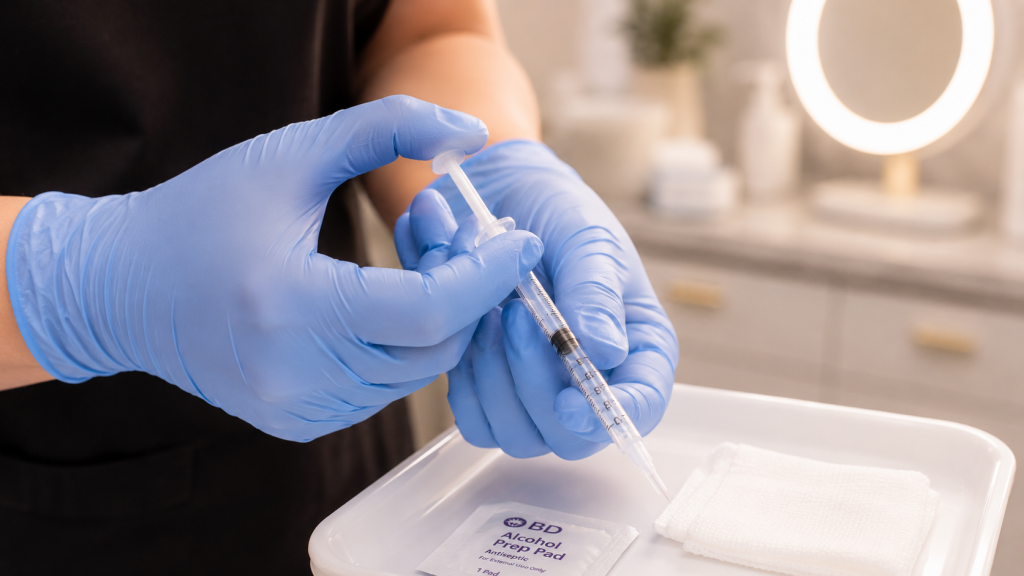
Caption: Transparent pricing conversations during your consultation ensure your treatment plan aligns with both your goals and your budget.
The Real Talk: Is It Worth It?
Here’s the section where we get uncomfortably honest. Med spa treatments are an investment, not a necessity. If you’re struggling to cover rent, you should not be financing lip fillers. Full stop. No treatment is worth financial stress.
But if you have discretionary income and you’re weighing whether these treatments deliver real value, the answer is: they can, if your expectations are grounded.
The cheap treatment trap is real. A $9-per-unit Botox special might use diluted product, meaning you need more units to see an effect. A $99 filler deal might use expired or counterfeit product. We’ve seen patients come in after budget injections with asymmetry, lumps, or vascular complications that cost thousands to correct. The most expensive med spa treatment cost is the one that goes wrong.
Maintenance is mandatory. Botox lasts 3–4 months. Fillers last 6–18 months. Hydrafacials work best monthly. If you’re looking for a one-time miracle, you’ll be disappointed. The patients who look consistently refreshed are the ones who budget for upkeep.
Results are subtle. Your coworkers shouldn’t ask if you “had work done.” They should ask if you started sleeping better. If you’re chasing dramatic transformation, surgery might be the better route. Med spa work refines; it doesn’t rebuild.
We had a patient last year who saved for six months to afford her first full-face rejuvenation plan. She cried when she saw the total. Not because it was unfair, but because she finally understood why her previous $200 “deals” never worked. She needed the right product, the right dose, and the right provider. When she got all three, she told us it was the first time she felt like her outside matched how she felt inside. That’s the value proposition. Not vanity. Alignment.