
You’ve tried the eye creams. You’ve double-patched with caffeine. You’ve learned the ancient art of colour-correcting concealer. And still—every morning, same story. That shadow under your eyes makes you look exhausted even after a full night’s sleep.
Here’s what most people don’t realise: dark circles aren’t one problem. They’re four or five completely different problems that happen to look similar in the mirror. That’s why some people rave about tear trough filler and others say it did absolutely nothing. And why under-eye filler vs PRP keeps showing up in searches from people who’ve already tried one and felt let down.
By the end of this article, you’ll know exactly which type of dark circle you have, which treatment targets it, and whether you might actually need a combination of both to get the result you’re looking for.
Quick Answer: Under-eye filler (tear trough filler) restores lost volume and reduces shadowing caused by hollow under eyes. PRP (platelet-rich plasma) improves skin quality, pigmentation, and thin skin texture. If your darkness comes from hollowness, filler is likely your answer. If it comes from pigmentation, surface veins, or crepe-y skin, PRP is the better match. Many patients need both.
Why Dark Circles Are So Hard to Treat {#why-dark-circles}
The under-eye area is genuinely one of the most complex regions on the face. The skin there is roughly 0.5mm thick—about four times thinner than the skin on your cheek. Beneath that thin layer sits a network of blood vessels, fat pads, muscle, and bone. Any change in any of those layers can project as “darkness” from the outside.
So when you look up dark circle treatment and find wildly conflicting advice—fillers, lasers, PRP, surgery, eye creams—it’s not because the industry is confused. It’s because different people actually have different problems. The treatment that works beautifully for your friend’s tear trough hollows might do nothing for your pigmentation issue. And vice versa.
Most people walk in thinking darkness is just one thing. Working out which type you have is the whole game.
The Four Causes of Under-Eye Darkness (A Diagnostic Guide) {#four-causes}
Before comparing any treatments, you need to figure out why your under-eyes look dark. Grab a good light and a mirror.
Is It Volume Loss (Hollow Under Eyes)?
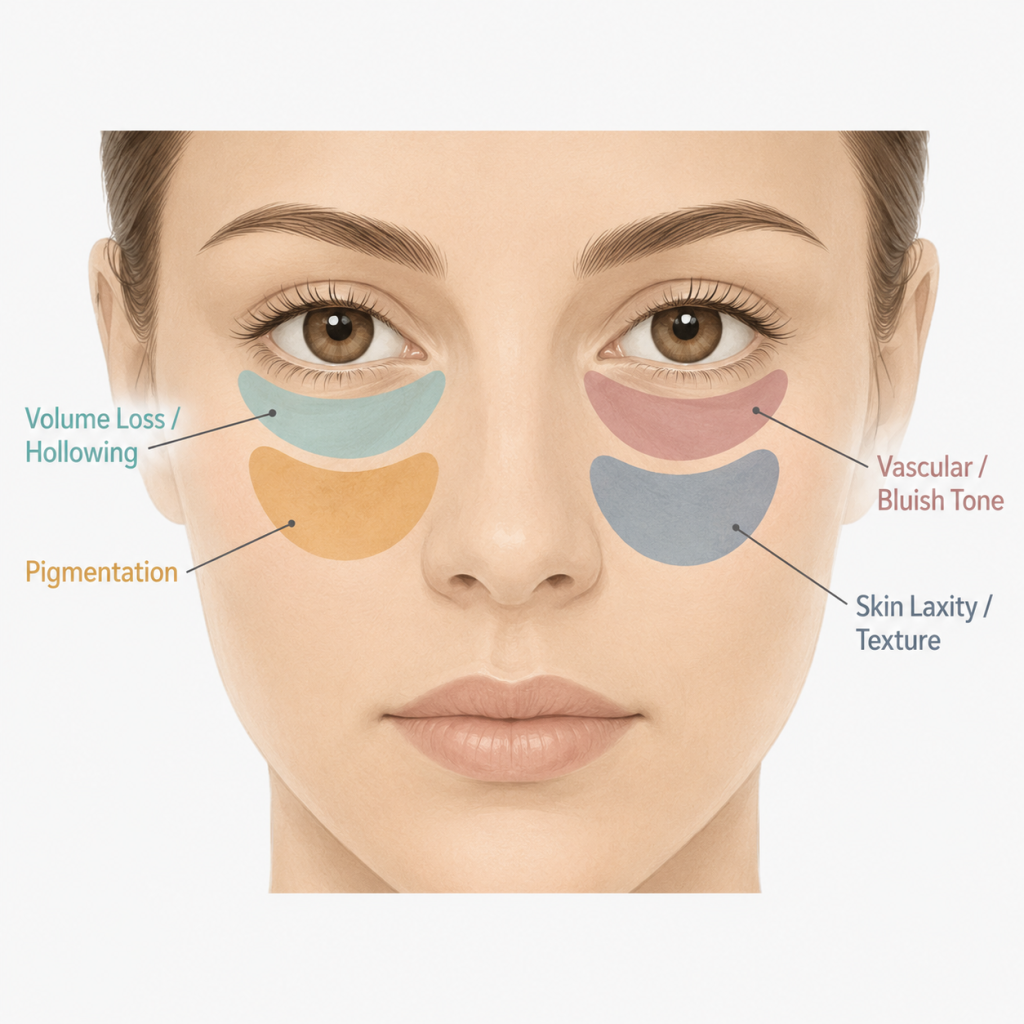
This is the most common cause in people over 30—and the one filler addresses directly. As we age, the fat pads beneath the eye shrink and shift. The result is a hollow or groove (the “tear trough”) that creates a shadow, especially in overhead lighting. If your darkness looks worse in certain lighting angles and better when you push your cheek up slightly with a finger, volume loss is likely playing a role.
Is It Pigmentation?
Some people—particularly those with South Asian, Middle Eastern, or Mediterranean heritage—carry more melanin in the under-eye skin, leading to brownish discolouration that has nothing to do with volume. Sun exposure makes it worse. This type of darkness looks more like a brown patch than a shadow, doesn’t change with lighting angle, and won’t improve with filler.
Is It Vascular (Bluish-Purple Tones)?
That bluish-purple cast you sometimes see? That’s the colour of blood vessels showing through ultra-thin skin. It’s partly genetic, worsened by fatigue and dehydration. PRP can help by thickening the skin over time—but a laser or topical treatment targeting vascularity may also be part of the plan.
Is It Skin Quality (Texture, Crepiness, Fine Lines)?
Years of UV exposure, poor sleep, and just being human thin out and crêpe the delicate skin under the eye. This type of darkness comes from the way light scatters across uneven texture. PRP thrives here. Filler alone won’t fix surface-level skin quality.
In reality? Most adults over 35 have at least two of these happening simultaneously. That’s why combination approaches are so common.
What Is Tear Trough Filler—And Who Is It Actually For? {#tear-trough-filler}
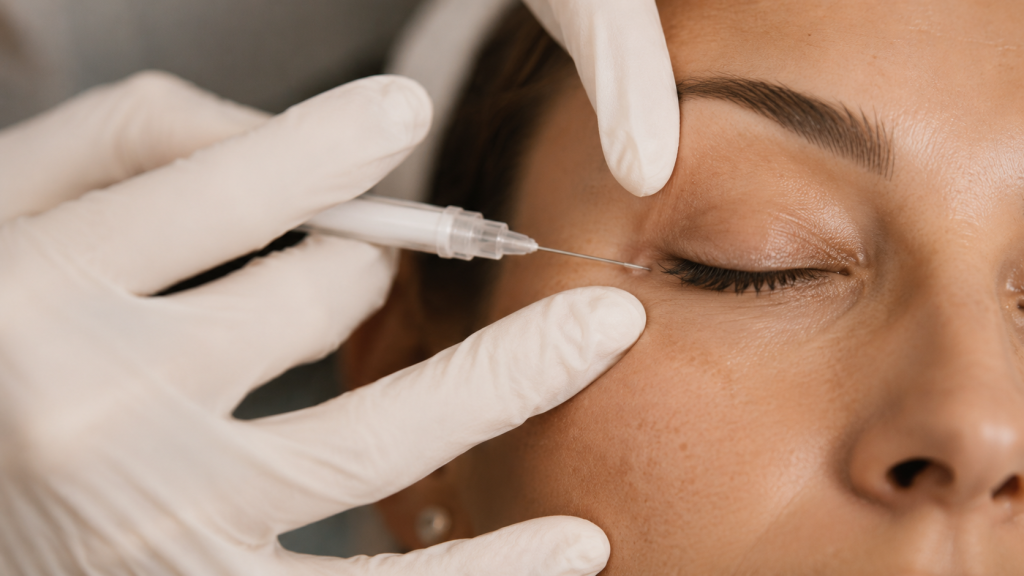
Tear trough filler is a hyaluronic acid (HA) gel—the same family of dermal filler used in lips and cheeks—injected carefully into the tear trough groove beneath the eye. Hyaluronic acid is a substance your body already produces naturally; in filler form, it attracts water and physically plumps the hollow, reducing the shadow it creates.
How the Treatment Works
Most experienced injectors use a blunt-tipped microcannula rather than a sharp needle—this significantly reduces bruising and allows the product to be placed more precisely along the tear trough groove. The whole procedure typically takes 20–30 minutes. You’ll feel a little pressure as the cannula moves through the tissue, maybe a mild sting at the entry point. It’s genuinely not as dramatic as people expect.
What Results Look Like
The shadowing softens noticeably—sometimes immediately, though mild swelling in the first 24–72 hours can obscure the final result. Once settled, most patients see a refreshed, more rested appearance that typically lasts 12–18 months, though this varies based on the specific product used, how quickly your body metabolises it, and how much movement (chewing, squinting) the area sees.
Best Candidates for Tear Trough Filler
You’re a strong candidate if you have visible hollowing or a groove under the eye, a “tired” appearance despite good sleep, or darkness that changes with lighting angle. If you have significant under-eye bags (puffiness caused by fat herniation), filler may not be the right first step—and an honest provider will tell you that upfront. We’ll cover this more in the Real Talk section.
What Is PRP Under the Eyes—And When Does It Make More Sense? {#prp-under-eyes}
PRP stands for platelet-rich plasma. It’s produced from your own blood—a small amount is drawn, spun in a centrifuge to concentrate the growth factors, and then reintroduced into the skin. Under the eyes, PRP is typically micro-needled or injected superficially into the skin itself (not deep like filler).
Those concentrated growth factors signal your skin to produce collagen, thicken the dermis, and improve overall skin quality. It’s slower than filler. Most patients need 3 sessions spaced 4–6 weeks apart before the full effect is visible—and the results build over months, not days. But what PRP delivers—genuine tissue regeneration—is something filler simply can’t replicate.
Why PRP Under the Eyes Makes Sense for Certain Concerns
If your darkness is brownish (pigmentation-related), purplish-blue (vascular), or accompanied by thin, crepe-y skin texture, PRP targets the actual tissue quality rather than just filling space beneath it. Over time, the skin becomes thicker, better able to hide the underlying vasculature, and smoother in texture. Some patients also notice a subtle brightening of hyperpigmented areas as skin cell turnover improves.
One thing we hear often: patients who’ve had this treatment describe the under-eye skin feeling firmer—more resilient—in a way that’s hard to explain but easy to notice when you look in the mirror a few months later.
Best Candidates for PRP
You’re a strong candidate if you have brownish or bluish pigmentation under the eyes rather than a hollow shadow, very thin skin with visible surface veins, fine crepiness or texture concerns, or you’re earlier in the aging process and not yet experiencing significant volume loss. PRP is also a good option for people who are cautious about putting filler near their eyes—it’s your own blood, nothing synthetic.
Under-Eye Filler vs. PRP: Side-by-Side Comparison {#comparison}
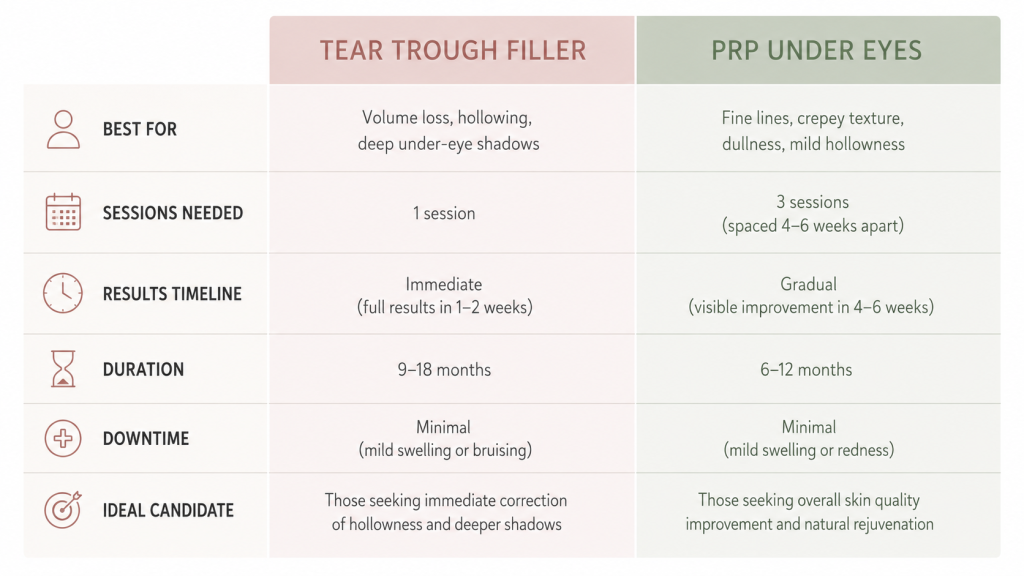
| Tear Trough Filler | PRP Under Eyes | |
| Best For | Volume loss, hollow under eyes, shadow from groove | Pigmentation, thin skin, vascular darkness, texture |
| Sessions Needed | Usually 1 | Typically 3 (spaced 4–6 weeks apart) |
| Results Timeline | Immediate (with settling over 1–2 weeks) | Gradual (3–6 months for full effect) |
| Duration | 12–18 months typically | Longer-lasting tissue changes; maintenance varies |
| Downtime | 0–3 days (possible swelling/bruising) | Mild redness for 24–48 hours |
| Works On | Volume deficit beneath the skin | Skin quality at surface and dermis level |
| Who Should Avoid | Active under-eye bags/herniated fat | Those on blood thinners (discuss with provider) |
Do You Actually Need Both? {#combination}
Honestly? More often than not, yes. Volume loss and skin quality decline don’t politely take turns—they happen together. A patient with hollow tear troughs and pigmentation won’t get full satisfaction from filler alone. And someone with thin, crêpey skin and some hollowing won’t be done with PRP alone either.
A combination approach—filler to restore structure, PRP to improve surface quality—is increasingly the gold standard for comprehensive best treatment for under eye bags and dark circles. The filler addresses the architectural problem. The PRP handles the biological one. Together, they do something neither could alone.
We’ve had patients come in after years of filler appointments, wondering why they still look tired. Nine times out of ten, the hollowing is resolved—but the skin quality issue was never addressed. Adding a PRP series made the difference.
Your provider will assess both factors during consultation and give you an honest picture of which problem (or combination of problems) you’re actually dealing with.
To learn more about how we approach facial rejuvenation holistically, read about our full-face assessment consultations or explore our skin regeneration treatments to see how we combine modalities for real results.
What These Treatments Can’t Do (Real Talk) {#real-talk}
Because this is a high-anxiety area—and because under-eye treatments require real skill and honest expectations—here’s the part most articles skip.
Filler won’t fix structural under-eye bags. If your puffiness comes from fat herniation (that rounded, cushion-like swell under the eye that’s there regardless of sleep or hydration), that’s a structural issue. Adding filler beside it can sometimes make the area look more full in an unflattering way. A good injector will identify this in consultation and be straight with you about whether filler is appropriate.
PRP is not a quick fix. If you want results before an event next month, PRP isn’t it. It works through biological processes that take time. Patience isn’t optional—it’s part of the treatment.
Neither treatment will dramatically change your bone structure or address significant skin laxity. If volume loss is severe, or if there’s significant skin looseness contributing to the appearance, other modalities—or a surgical opinion—may be worth discussing.
Results vary. Genuinely. Metabolism, skin quality, age, lifestyle, and how your body responds to these treatments all influence outcomes. Most patients see significant improvement. Most is not all.
And one more thing—neither treatment requires you to look frozen, overdone, or different. The goal is to look like you, on a well-rested morning. That framing should guide every consultation you have.
Disclaimer: The information in this article is for educational purposes only and does not constitute medical advice. Individual results vary. A consultation with a qualified provider is required to determine candidacy for any treatment. Most providers recommend waiting until after pregnancy and breastfeeding before pursuing any injectable treatments.